Lip Colour Tattoo Explained: A UK Buyer's Guide
How Thick to Apply Peel-Off Lip Liner: A Layer-Thickness Masterclass
Too thin tears; too thick won't dry. Learn how thick to apply peel-off lip liner, with visual cues, layer strategies and a troubleshooting table.
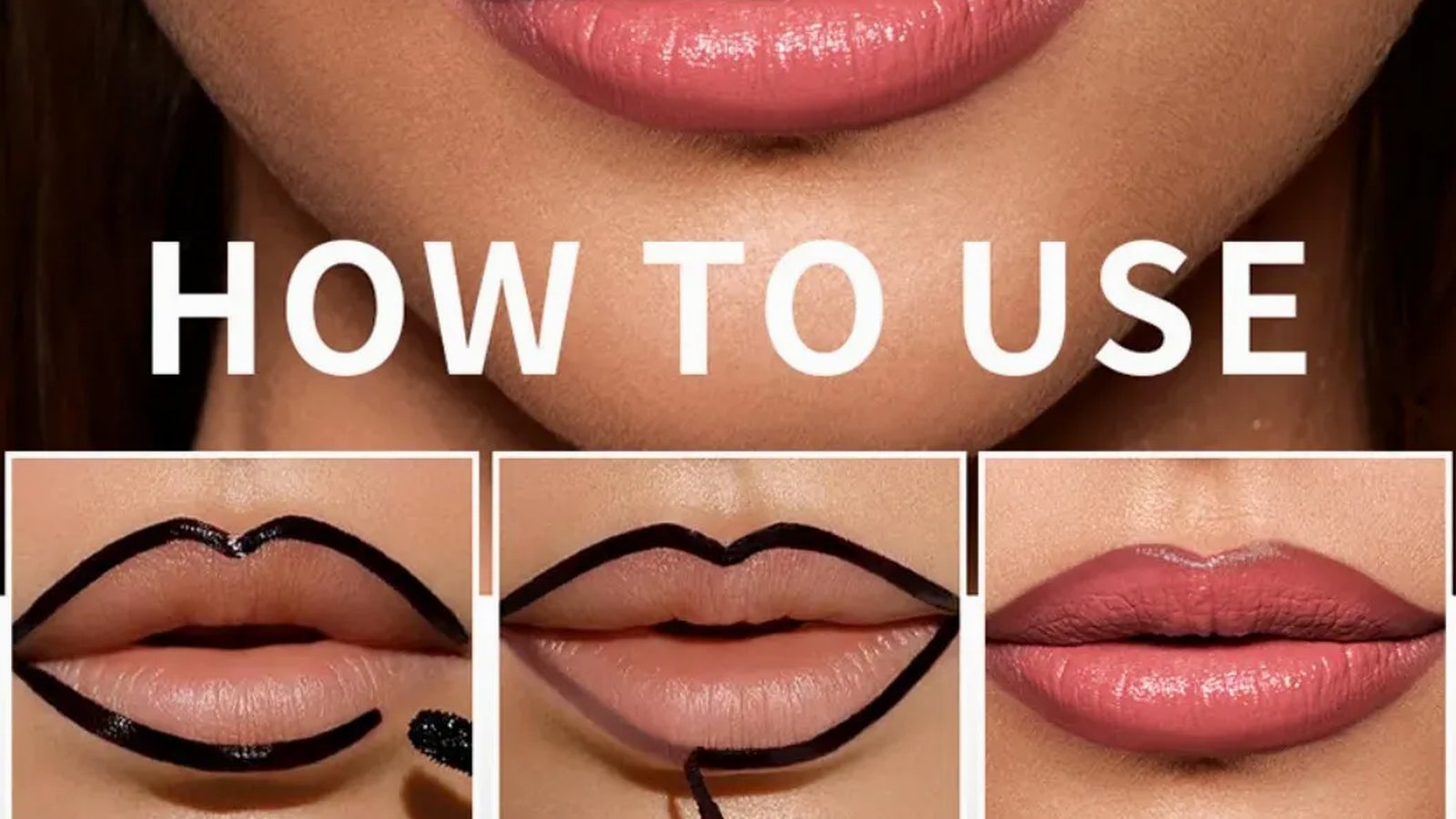
Apply peel-off lip liner thick enough that no lip skin shows through the product — an opaque, frosting-like layer rather than a sheer wash. A too-thin coat dries into a fragile film that tears and stains patchily; a properly thick one peels away in a single satisfying strip, leaving even colour behind.
Thickness is the most misunderstood variable in the whole peel-off routine. Most first-timers apply these formulas the way they would a lip gloss — a light, polite sweep — because a heavy layer feels wrong. With this category, the polite sweep is precisely what causes the two most common failures: films that shred on removal, and colour that arrives in patches. Here is the masterclass version of getting it right.
Why a thin layer tears instead of peeling
Peel-off liners work by film formation. As the water in the formula evaporates, film-forming polymers knit together into a continuous, flexible sheet; peel that sheet away and the dye it held stays behind as a stain. The catch is that a film needs a minimum amount of material to knit properly.
Peer-reviewed work on peel-off cosmetics shows this directly. A published study of peel-off mask formulations found that versions with too little film-forming polymer dried into irregular films full of flaws, with wildly inconsistent thickness across the surface, while properly loaded versions dried uniform and strong. The successful films measured roughly 150 to 300 micrometres — about the thickness of two or three sheets of printer paper. Flawed, uneven films are exactly the ones that snap and shred when pulled.
You cannot change the polymer percentage inside the tube, but you control the same variable at the mirror: how much you lay down. Brands are blunt about this. Sacheu, one of the category’s best-known names, lists a too-thin layer as the first likely cause under “the film won’t peel off easily or tears” in its troubleshooting guide, and its fix is simply “apply a thicker layer next time”. Lakerain’s own three-step routine for its peel-off liner asks for the same thing: a thick, even layer, whether you are lining the edge or tinting the full lip.
The standard: no skin visible through the product
The clearest thickness rule in the category comes from Wonderskin, whose Wonder Blading peel-off kit went viral on TikTok. Its instructions say to spread on two to three layers so lips are completely covered and there is “no natural skin visible”. Its tips page goes further: apply several thick layers even if you want a sheer final look, because skimping on the masque causes blotchy colour — you control sheerness with a shorter set time, not a thinner layer. (Wonderskin’s kit sets with an activator spray rather than air-drying, but the coverage rule translates directly to air-dry liners.)
“No skin visible” is the standard because staining is contact-driven. Anywhere your skin peeks through the wet product is a spot receiving little or no dye, and it will peel as a pale patch. Since nobody can measure micrometres at the bathroom mirror, use these visual cues instead:
- The opacity check. Look straight on. If you can see your lip lines, darker patches or any skin tone through the wet product, it is not thick enough yet. The layer should read as one solid block of colour.
- The icing test. The surface should look like smooth, freshly piped icing — a proper wet sheen with a little dimension — not like a tinted balm that has sunk in.
- The glide test. The applicator should float on a cushion of product. If you can feel the tip dragging against your lip, you are scraping the layer too thin.
- The edge bead. Finish the outline with one deliberate pass so the border is as generous as the centre. Wispy, feathered edges are where corner-peels fail to start.
Thickness changes colour depth — and dry time
More product means more dye sitting against the skin while the film sets, so a thicker layer generally stains deeper. Red Aspen, another peel-off lip stain brand, tells customers that the more product applied and the longer it sets, the more intense the end result — and that a slightly thicker layer also makes the film easier to remove in one piece. Thickness is therefore your intensity dial as well as your anti-tearing insurance: one opaque coat gives a soft everyday flush, a heavier build left for the full set window reads far bolder.
The trade-off is time. Lakerain states its liner needs 5–10 minutes untouched before peeling; plan for the top of that window when the layer is generous, because a half-dry film has no strength at all.
One coat or two? Pick a strategy
| Strategy | How it works | Best for | Watch out for |
|---|---|---|---|
| One generous coat | A single opaque pass until no skin is visible | Most wears; the most even film | Blot pooled excess at the corners with a tissue edge |
| Wet-on-wet build | Re-dip and fill sparse spots immediately, while everything is still wet | Fixing see-through patches before they dry | Work quickly; never stroke through half-set product |
| Peel, then repeat | A full second application after peeling the first | Maximum colour depth for evenings out | Doubles the total drying time |
Sacheu’s guide explicitly backs the middle row: re-dip the applicator and fill sparse or patchy areas straight away, so coverage is even by the time you peel. What you should never do is drag fresh product across a half-set film — the applicator lifts and wrinkles the forming layer, and the repair ends up worse than the gap.
Troubleshooting: what your peel says about your layer
| Symptom | Thickness diagnosis | Fix |
|---|---|---|
| Film shreds into flakes | Whole layer too thin | Build to full opacity; wait until the edges begin to curl before peeling |
| Peels whole, but colour is patchy | Thin spots where skin showed through, or chapped flakes grabbing pigment | Even opacity everywhere; exfoliate first |
| Corner will not lift to start the peel | Edges feathered thinner than the centre | Finish the outline with a deliberate full-thickness pass |
| Colour barely there after peeling | Too thin, peeled too early, or both | Thicker layer plus the full dry time — see our guide to peel-off lip stain leaving no colour |
| Still tacky after ten minutes | Over-thick pooling, or lips pressed together mid-dry | Blot standing excess before drying starts; keep lips relaxed and parted |
| Darker rim than centre | Product pooled along the lip line | One smoothing pass to level the wet layer before it sets |
If tearing is your recurring nightmare even at the right thickness, our guide to peeling off lip liner without tearing covers peel angle and removal technique. Thickness fixes the film; technique fixes the peel.
Where the Lakerain set fits in
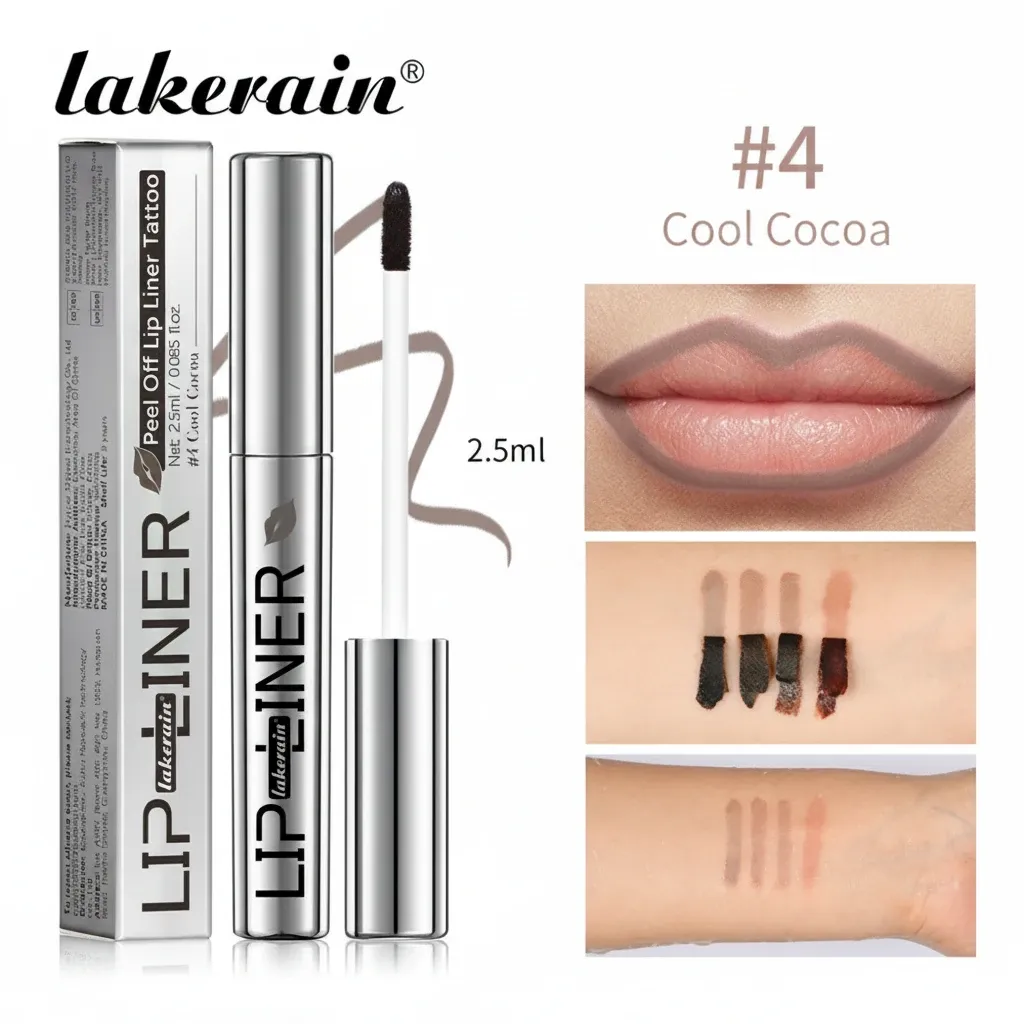
An opaque layer is much easier to build when the applicator cooperates. The Lakerain Peel-Off Lip Liner Tattoo 4-piece set — £9.99 with free UK delivery, dispatched from Manchester — uses a precision tip that lays down a generous bead along the lip line, so reaching “no skin visible” takes a couple of passes rather than guesswork; the Lip Blushing Tattoo set covers four shades from rose pink to cool cocoa. For the complete routine around the thickness rule — prep, outline order, peel direction and aftercare — start with our step-by-step guide to how to apply peel-off lip liner.
One seasonal note for UK readers: lips coming out of central-heating season into March are usually flakier than they look, and pigment clings to chapped patches. Exfoliate and let lips dry fully before you worry about thickness at all.
FAQ
How many layers of peel-off lip stain should I apply?
The layer count matters less than the end state: full coverage with no skin visible anywhere. Wonderskin’s instructions call for two to three layers to reach that point; Sacheu recommends one generous coat, re-dipping immediately to fill sparse patches. With a precision-tip liner, one thick pass plus wet touch-ups usually gets there. If you can still see your lip lines through the product, keep building while it is wet.
What happens if peel-off lip liner is applied too thin?
Two failures follow. First, the dried film lacks the strength to hold together, so it tears into flakes instead of peeling away in one strip — Sacheu’s troubleshooting names a too-thin layer as the likely cause and tells you to apply a thicker one next time. Second, less dye sits against the skin while the film sets, so whatever colour survives is pale and patchy. Thin application is the root of most first-attempt disappointments.
Does a thicker layer take longer to dry?
Yes — there is simply more water to evaporate. Lakerain’s stated window is five to ten minutes untouched, and a generous layer belongs at the top of it; Sacheu’s thicker-film formula asks for ten to twenty. Judge readiness by the film rather than the clock: the surface should look uniformly set, and the edges should have started curling away at the corners. Peeling a half-dry film wastes the whole application.
Can you apply peel-off lip liner too thick?
There is a practical ceiling. Genuinely pooled product — enough to threaten a drip — takes far longer than the stated window to dry through, stays tacky at the centre and can smudge when you talk. If the layer looks likely to slide, press the edge of a tissue against the excess before it sets. The target is opaque and even across every part of the lip, not maximal volume.
Ready to transform your routine with Lakerain?
Shop Now — £16.99